| Primary Keyword |
| PVC-O Extruders |
| Secondary Keyword |
| plastic pipe making machine |
| One-step method production |
| O-pvc pipe |
| Plastic Pipe Production |
| PVC-O |
| PVC-O Extrusion Line |
| PVC-O pipe making machine |
Are you fed up with pipe failures, increased maintenance expenditures, or reduced water flow? Maybe it’s the time to consider a new pipeline material. Don’t worry, PVC-O Extruders pipes offer incredible advantages in strength and long-term efficiency. Let’s explore O-pvc pipe, its process, potential advantages, durability, cost, drawbacks, and many more. So, stay connected!
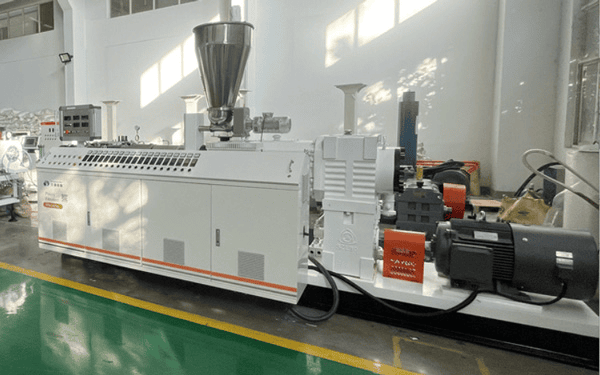
1) What Is PVC-O?
“PVC-O or biaxially oriented polyvinyl chloride is a more advanced version of PVC pipe. It is produced with a more vigorous processing method than regular PVC pipe.”
Unlike PVC-U (unplasticized PVC), batch PVC-O undergoes a particular orientation method where the pipe is both lengthwise and crosswise stretched. This form of orientation helps to transform the chemically weaker versions of PVC molecules to a rigid and structured version that yields a stronger and flexible pipe.
It all begins with a standard PVC-U pipe. This pipe is then subjected to reheating and advanced stretching with extruder (plastic pipe making machine) systems. The stretch is both axial (lengthwise) and radial (across the diameter). Well, these processes of stretching lead to enhancement in tensile strength, impact resistance, and pressure handling capabilities of the material.
The classification of PVC-O pipes follows the Minimum Required Strength (MRS) criteria, which sits in the range of 315 to 500 MPa. As with most materials, the MRS rating has a direct correlation to the strength and durability of the pipe—the higher the MRS, the stronger and tougher the pipe.
Crude examples such as the MRS 500 pipes show that they are remarkably strong and at the same time, lightweight, with impressive ratings on hydraulic performance.
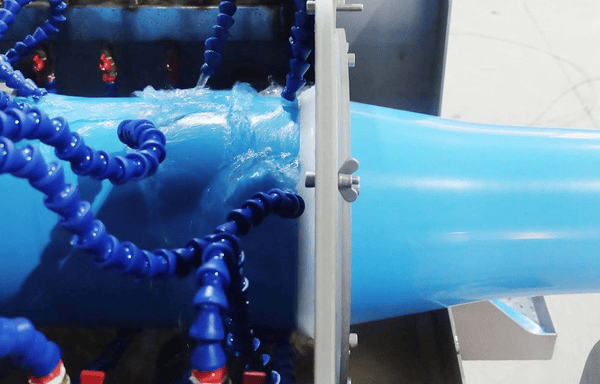
Lighter and stronger than traditional PE (polyethene) pipes, PVC-O pipes also boast a greater efficiency. Yes, they deliver almost double the strength with thinner walls, increasing flow capacity and enhancing ease of handling during installation. To summarise, modern pipe manufacturing owes its strength, flexibility, and long-term durability attributes to PVC-O.
2) The PVC-O Extrusion Process
Regular PVC-U pipes can be transformed into stronger and more flexible pipes known as PVC-O pipes through a well-controlled process. The process is called biaxial orientation, where a pipe is longitudinally and outwardly stretched to enhance the material’s inner structure, increasing its toughness and durability.
Upon orientation, rigidity is achieved, making the pipe more suitable for high pressures. The one-step and two-step methods are the two main categories for making PVC-O pipes.
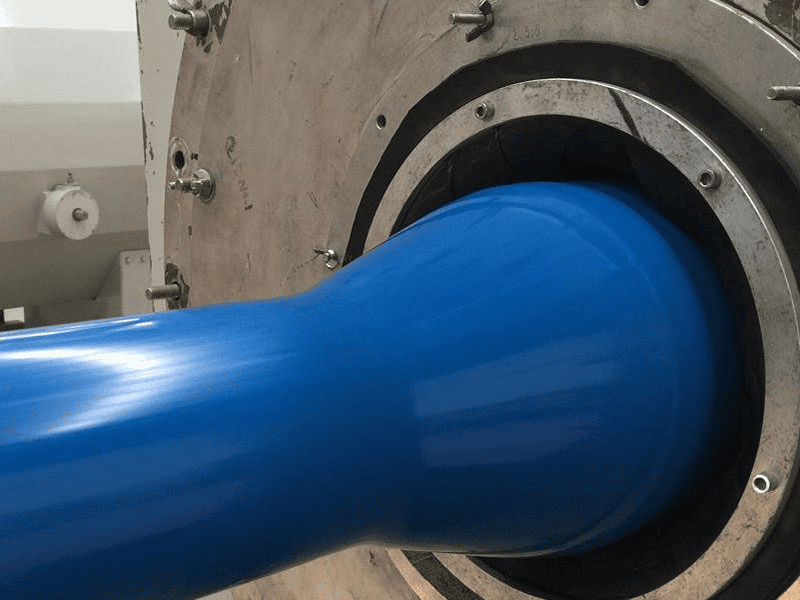
In the One-step method production, pipes are extruded, stretched, and cooled in a single continuous line. This technique is compact, more efficient, and economical, ideal for small to medium-sized pipes.
The two-step process differs from the one-step setup by focusing on large-diameter pipes. Initially, a PVC-U pipe is formed and cooled, then reheated and stretched to enhance molecular alignment for quality control.
Modern extruders of PVC-O are equipped with high-performance features. These include high-torque screws and precision molds designed to form the base pipes. Once the pipes are formed, they are subjected to biaxial stretching—either mechanical or air-based—at controlled temperatures. This increases the pipe’s strength around 25%, yielding 31.5 MPa.
In addition, these systems are highly automated. Nowadays, most systems have PLC temperature, speed, and pressure controllers, which help maintain consistent pipe quality throughout plastic pipe production.
Regardless of the system applied, be it compact one-step setups or larger two-step systems, these processes ensure that PVC-O pipes have remarkable strength, exceptional flexibility, and extended service life.
3) Potential Advantages of PVC-O Pipes
PVC-O pipes are different from the conventional piping materials because they offer some significant advantages. Here is what sets them apart in terms of strength and performance:
Enhanced Mechanical Strength
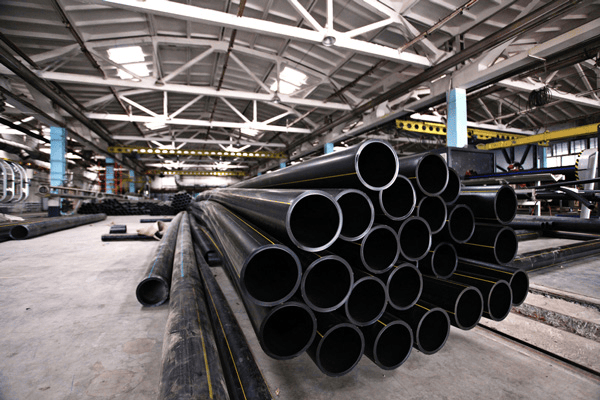
Compared to PVC-U pipes, PVC-O pipes offer much higher strength. The biaxial orientation process helps to increase tensile strength due to the tight molecular alignment in the pipe, enabling up to a 25% increase. It also helps the pipe maintain stronger internal pressure and makes the pipe lighter and thinner, which is suitable for water supply and irrigation networks.
Remarkable Impact and Fatigue Resistance
High impact resistance, even at cooler temperatures, is one of the key benefits of PVC-O pipes. Unlike standard pipes that face cracking or breaking upon impact, PVC-O pipes resist impact easily. Also, these pipes exhibit remarkable fatigue resistance. The ability to withstand repeated pressure cycles makes these pipes ideal for sustained usage in high-pressure systems.
Hydraulic and Flow Efficiency
These pipes utilise pressure differentials for the smooth internal surface in the piping system, along with thinner walls and high strength to enable water flow. They also maintain the outer diameter and aid in reducing friction, translating to less energy for pumping. All these factors enhance the flow rate while reducing the cost of operations over a period of time.
Durability Under Environmental Stress
PVC-O pipes withstand severe ground shifting, vibrations, and even temperature fluctuations. In addition to these, they also resist corrosion, UV radiation, and most chemicals found in soil and water. Well, these factors increase their reliability in outdoor and underground applications.
Also, these factors explain why choosing PVC-O is beneficial for building durable, economically smart, and resilient piping systems.
4) Sustainability & Lifecycle Benefits
PVC-O pipes also impacted the economy positively. Here’s a breakdown towards sustainability and economic efficiency:
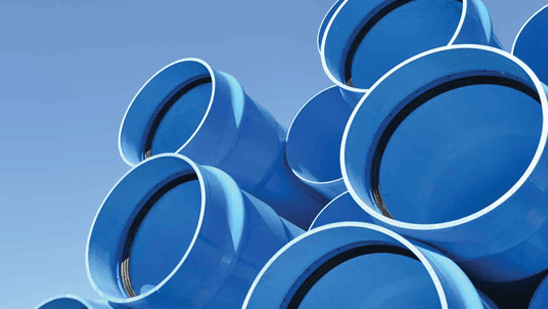
+ Reduced material utilisation: Due to biaxial orientation, PVC-O pipes result in an increased strength-to-weight ratio, resulting in thinner walls. This enhances material efficiency by up to 50% raw material in production.
+ Reduced weight: Compared to PE pipes and standard PVC-U, PVC-O pipes are 60% lighter. You will observe these practically while transportation and installation due to lower weight, lower fuel and energy consumption.
+ Reduced carbon emissions: Reduced weight, along with using fewer materials, results in reduced emissions at the manufacturing and delivery stages. During piping construction, the environmental footprint is lessened.
+ Reduced emissions during production: Modern PVC-O extruders with automated Programmable Logic Controller controls and air-based cooling systems replace water tanks with PLC controlling features. It results in decreased water and energy consumption during polyethene oxide manufacturing.
+ Minimal Installation Impact: The use of heavy lifting machines is reduced with the use of lightweight pipes, which minimises ground disruption and decreases fuel emissions on-site, beneficial for eco-sensitive regions.
+ Extended Service Life: The resistance of PVC-O pipes to corrosion, fatigue, and cracking is exceptional. Their strength over time translates into fewer repairs and replacements, and significantly less waste over decades of service.
+ Reduced total lifecycle cost: Although the starting cost of the equipment is high, it requires less maintenance. Therefore, it becomes cost-effective at the end of the day. Thus, the total ownership costs reduce over time.
+ Can be Recycled: PVC-O pipes can be recycled fully after their life cycle is completed and can be used to produce new plastic products, thus following the circular economy approach.

Overall, PVC-O pipes provide the infrastructure with endurance and operational efficiency while offering eco-conscious lifecycle costs.
5) Operational & Cost Advantages
The operational and cost advantages of PVC-O pipes are things worth considering. These cost-saving benefits are due to stronger and more efficient performance and handling, thereby decreasing overall project costs.
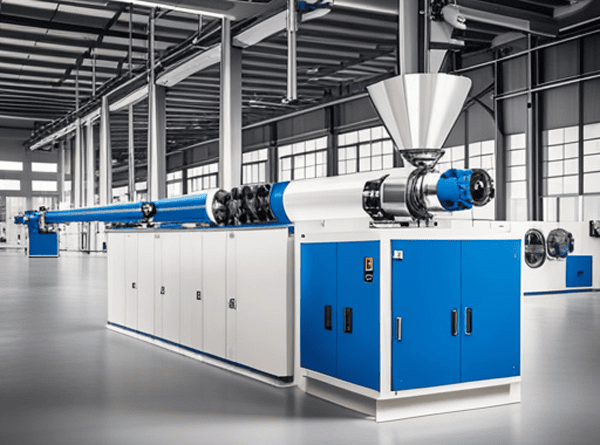
Quicker and Simpler Installation
The structure of PVC-O pipes makes them lightweight, which eases transportation and elevating onsite. Pipes of DN 250 mm can be lifted and positioned without machinery by workers. This leads to simplified and quicker installations, reduced staffing requirements, and compressed project timelines.
Lower Transport Costs
Moreover, their lower weight translates to higher pipe quantity per trip, thus reducing fuel use and delivery expenses, especially on long hauls.
Fewer Joints and Fittings
The flexibility and longer lengths of PVC-O pipes reduce the frequency of joints and fittings. This decreases material costs while simultaneously improving system reliability by minimising leak points.
Long-Term Cost Efficiency
The PVC-O extrusion line comes at a higher initial cost, but the pipes outperform standard PVC-U pipes in durability. A longer lifespan translates into fewer repairs and lower maintenance costs over time due to resistance against cracks, corrosion, and pressure changes.
Consistent Quality with Automation
Reduced operator error and more efficient operations result from fully automated modern extrusion systems that utilise high-torque screws, PLC controls, and precision molds. Well, such systems yield consistent production results, which minimises waste, adding further efficiency.
Better Value per Performance
For municipal and private infrastructure projects, PVC-O pipes prove to be more beneficial as they possess a value-to-cost ratio greater than conventional alternatives.
In brief, we can say that the advantages of PVC-O pipes extend from production and installation to lifetime operation.
6) Considerations & Potential Downsides
Alongside the benefits of PVC-O pipes, there are a few dark sides worth thinking about, which you should know before any real implementation.
! Increased Equipment Investment: The initial investment in PVC-O extrusion equipment is a considerable concern. As opposed to standard PVC-U extruders, this PVC-O pipe making machine, equipped with high-torque screws, precision molds, and automation systems custom designs are far more costly. For smaller market players, this is a type of hurdle.
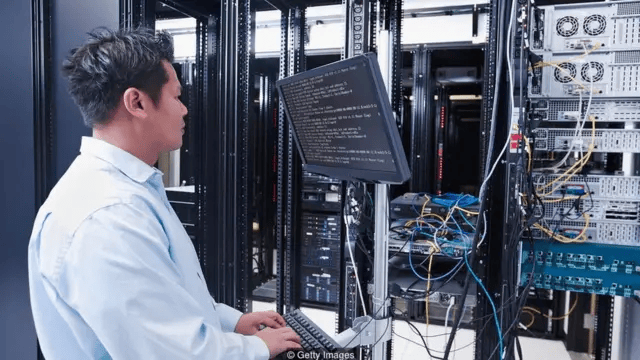
! Need for Skilled Personnel: Both the extrusion and orientation steps have technological complexities. Temperature controls, stretching ratio adjustment, and other automated systems require qualified engineers and skilled staff. Inadequate training can lead to poor outcomes in terms of pipe quality.
! Reduced Temperature Endurance: Pipes made of PVC-O are not the best suited for uses that involve high temperatures. Their accompanying mechanical strength can be compromised when subjected to heat for extended periods of time. So, in systems utilising hot water or fluids for industrial purposes, these pipes will not be a good fit.
! Sensitivity to Ultraviolet Radiation: Exposure to direct sunlight makes PVC-O, as with many other plastics, more prone to degradation. Pipes are best maintained by covering them with the appropriate UV protective materials or installing them underground.
Apart from the cited limitations, proper planning, training, and system design effectively mitigate the challenges posed, proving that PVC-O is a highly advantageous option in most scenarios.
7) Is Switching Worth It?
Absolutely! Switching to PVC-O is worth it if you are looking for long value, high performance, and decreased maintenance.
Unlike traditional PVC-U systems, the equipment’s upfront cost is distinctly higher; however, the advantages of PVC-O pipes, like greater strength, higher lifespan, lower operational costs due to lightweight construction, and ease of installation, far outweigh the investment. Moreover, they have lower energy requirements during pumping as well as significant benefits for high-pressure water and irrigation systems.
For manufacturers, modern PVC-O extruders guarantee uniform pipe quality, improved production efficiency, reduced scrap rates, and lower waste due to automated controls. Moreover, contractors and end users benefit from the reliability, safety, and sustained savings the product provides.
If the project you are undertaking requires sustainable and rugged piping, especially in rapidly growing infrastructure markets like India, switching to PVC-O is highly beneficial, as it ensures superior long-term ROI.
8) Conclusion & Recommendations
Alright! No hesitation to say that there is no stronger, more durable, or more efficient pipe than PVC-O for modern water distribution and irrigation systems. Although equipment costs may be higher, the value PVC-O pipes deliver in savings and performance over time far exceeds the initial investment.
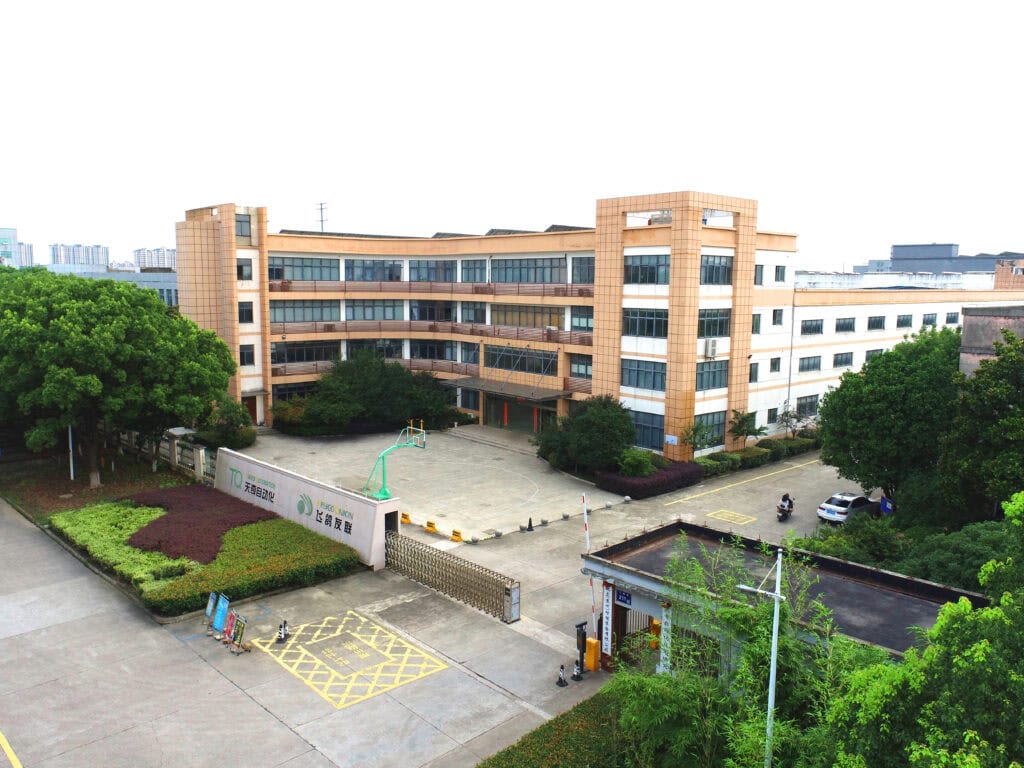
For those looking to improve production lines or procure premium quality PVC-O products, collaborating with a reliable specialist is recommended. Faygo Union aid customers with thorough technical support and, more importantly, state-of-the-art extrusion systems. It enables the uninterrupted and economical production of pipes that fulfil the contemporary infrastructural requirements. You can contact us right now!
PVC-O (Biaxially Oriented Polyvinyl Chloride) represents the latest technological advancement in PVC piping systems. This high-performance pipe is manufactured through a specialized biaxial stretching process. Specifically, PVC-U pipes are stretched both axially and radially, causing the molecular chains within the material to align uniformly and form a network-like structure.
This unique structure endows PVC-O pipes with exceptional properties, including: Superior strength;Enhanced toughness;Outstanding impact resistance;Excellent fatigue resistance.
Notably, the pipe’s strength increases significantly with the degree of stretching. For example, when the pipe diameter expands by 60%, its strength can increase from 25 MPa (standard PVC) to 31.5 MPa.
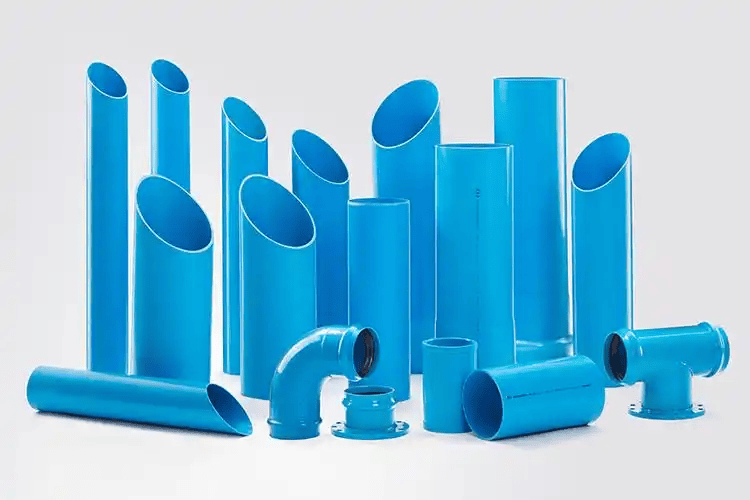
Advantages of PVC-O pipes
PVC-O (Oriented Polyvinyl Chloride) is an advanced PVC pipe variant produced via biaxial stretching technology. As an engineered upgrade to conventional PVC-U pipes, its molecular orientation delivers superior properties. The distinguishing features of PVC-O piping systems comprise:
1. High Strength: PVC-O pipes offer superior tensile, compressive, and impact strength compared to PVC-U pipes, withstanding higher pressures.
2. High Toughness: PVC-O pipes are more durable, with better fatigue and stress cracking resistance than PVC-U pipes.
3. Corrosion Resistance: PVC-O pipes match PVC-U pipes in corrosion resistance.
4. Wear Resistance: PVC-O pipes outperform PVC-U pipes in wear resistance, making them ideal for conveying abrasive materials.
5. Welding Performance: PVC-O pipes can be welded using the same methods as PVC-U pipes.
6. Lightweight & Efficient: PVC-O pipes are lighter, easier to install, and have lower transportation costs.
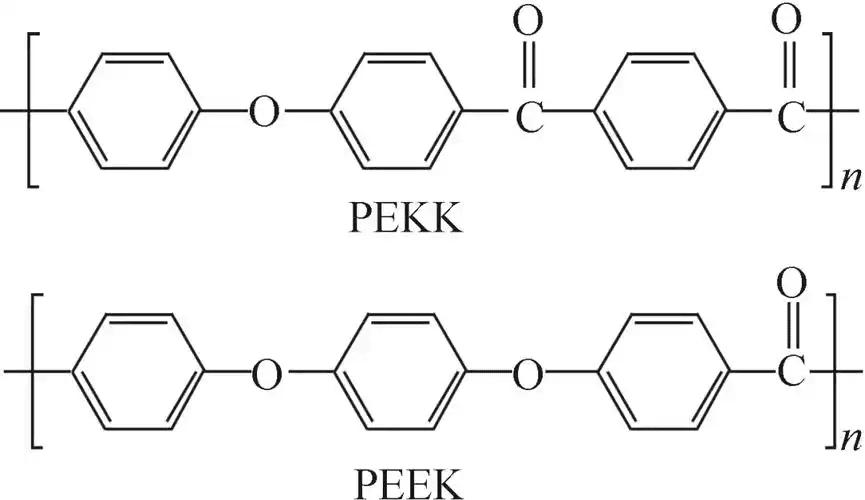
Features of PVC-O pipe extruder
PVC-O pipe extruder is a special equipment for producing biaxially oriented polyvinyl chloride (PVC-O) pipes, with the following significant features:
Efficient production:
One-Step Molding Method:This method for producing PVC-O pipes offers a small footprint, low electricity and labor costs, and minimal material waste.
Automation Control:The production line uses automation to achieve continuous, stable output, boosting efficiency.
High-quality output:
High-Torque Screw: A high-torque screw and advanced temperature control ensure stable material plasticization, uniform pipe extrusion, and precise sizing.
Precision Mold Design:The mold’s spiral diversion structure prevents surface marks on large-diameter pipes and ensures even melt distribution.
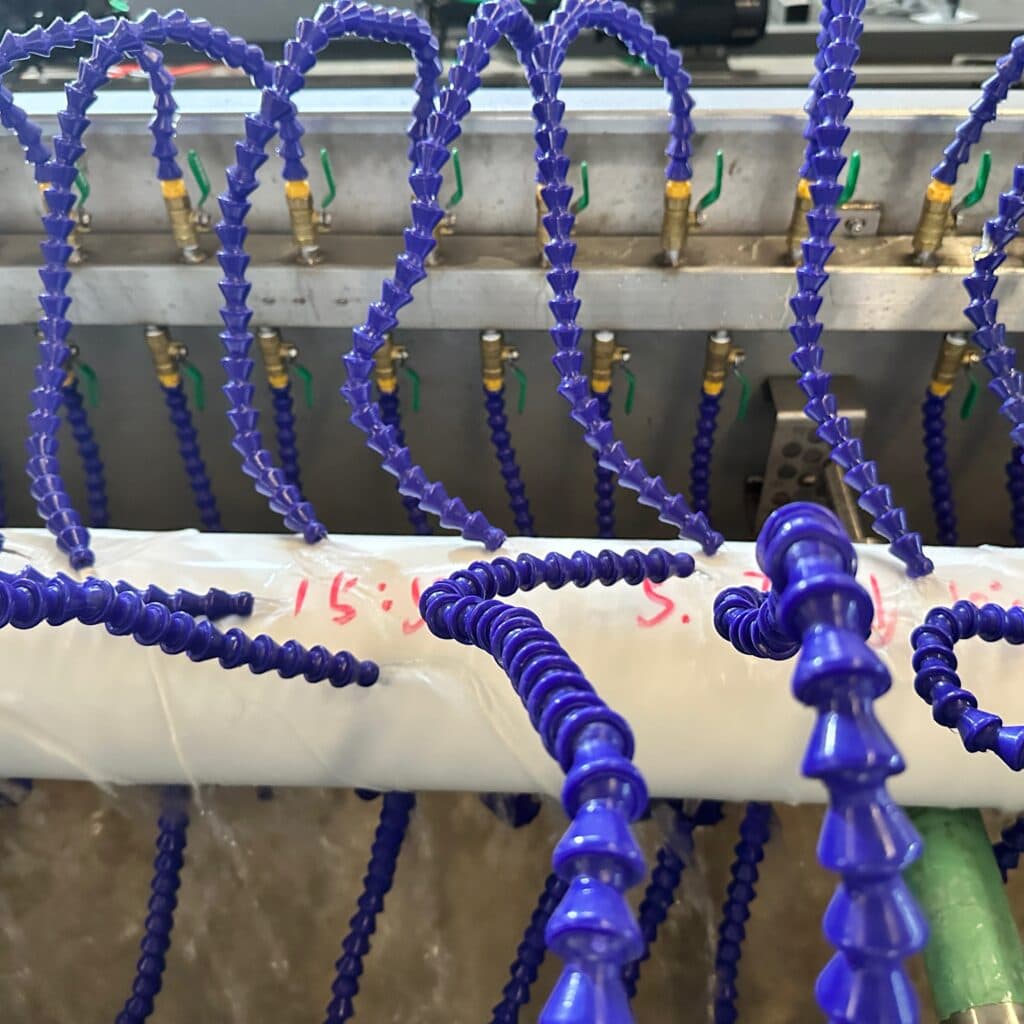
Vacuum Sizing and Cooling: A double-chamber vacuum tank provides intense cooling and vacuum functions, quickly and effectively forming and cooling the pipe.
Energy saving and environmental protection:
Low Energy Consumption Design:Efficient energy-saving design and advanced controls reduce energy use and waste in production.
Material Saving:PVC-O pipes use over 50% less material than traditional PVC-U pipes, significantly lowering material consumption.
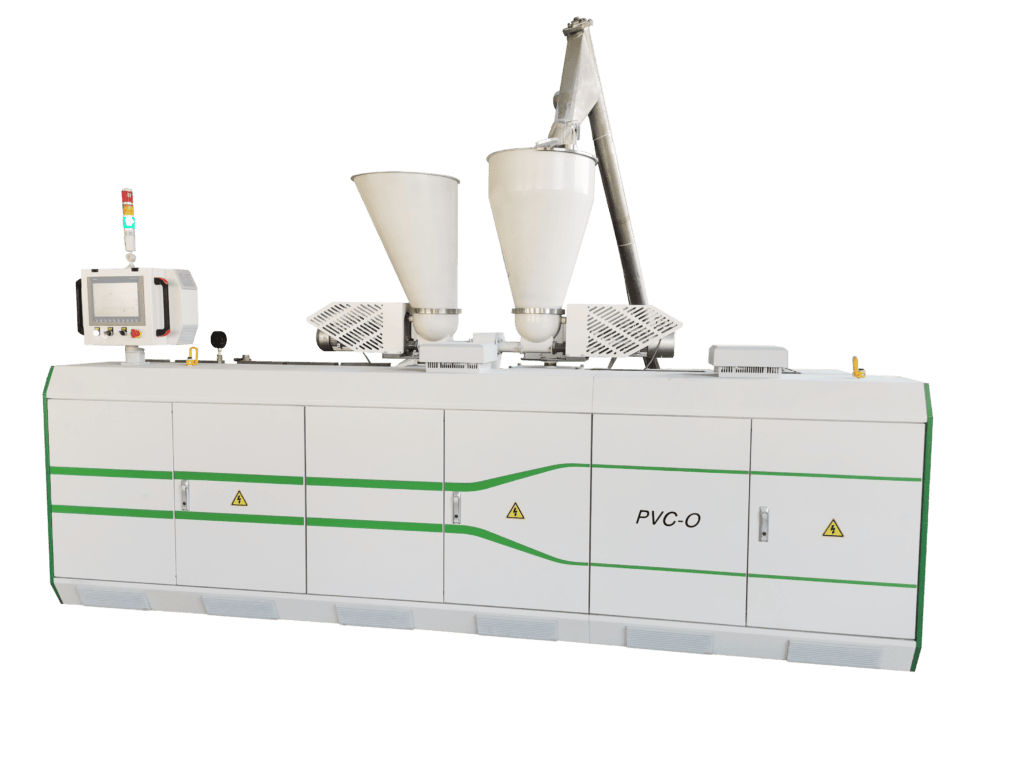
Flexibility and adaptability:
Production of Various Specifications:PVC-O pipes can be produced in diameters from 110mm to 630mm and pressure levels from PN5 to 25.
Customized Solutions:The production line can adjust molds and parameters for customized PVC pipes of various sizes and thicknesses.
Durability and reliability:
Wear-Resistant & Corrosion-Resistant Materials:The machine is built with durable, wear-resistant, and corrosion-resistant materials to enhance its longevity.
High-Precision Traction & Cutting System:The traction system ensures stable pipe movement, while the cutting system provides precise, fixed-length cuts synchronized with the main machine.

PCV-O pipe extrusion process
The production process of PVC-O pipes is divided into one-step and two-step methods:
One-step method(in-line method)
The one-step method, also known as the in-line process, is a process in which the extruded PVC-U pipe (thick stock) is continuously subjected to radial expansion and axial stretching to achieve biaxial orientation on the pipe extrusion production line, and then cooled and shaped into a PVC-O pipe.
advantage:
High production efficiency: Continuous production is achieved, which greatly improves production efficiency.
Low cost: Reduces equipment investment and production costs, and enhances market competitiveness.
Stable quality: During the online production process, the wall thickness control of the pipe is more precise and the product quality is more stable.
shortcoming:
Complex equipment: The production process is relatively complex, requiring high-precision equipment and control systems.
Difficulty in controlling wall thickness: Once the wall thickness of the tube billet changes, it is difficult to adjust online, which may affect the orientation uniformity of the tube.
Limited large-diameter production: When producing large-diameter (≥630mm) tubes, it is difficult to start the machine, the size control is difficult, and the scrap rate is high.
Two-step method (offline method)
The two-step method, also known as the off-line process or the in batch process, is a two-step process of extruding thick stock and biaxially stretching and orienting. First, the PVC-U pipe segment (thick stock) is extruded and cooled, and then oriented by heating and pressurizing it in the mold to expand it to the required size.
advantage:
Simple operation: The production startup operation is relatively simple, and the wall thickness can be measured and controlled in real time during tube production.
Large diameter advantage: Better performance in large diameter tube production, better control of product size, and reduced scrap rate.
High quality: The transverse stretching value can be higher, the orientation effect is better, and tubes with R-R sockets can be manufactured.
shortcoming:
Low production efficiency: The production speed is slow. Taking 315mm pipe as an example, it takes about 1 hour to produce a 6-meter pipe.
High cost: The equipment investment is high. In the production process, the invalid sections (about 5%) need to be cut off at both ends of each pipe, which increases material waste.
Difficulty in continuous production: Continuous production cannot be achieved, and the production efficiency and automation level are relatively low.
The one-step method suits small-to-medium pipe production, offering high efficiency and low cost but requiring precise equipment and limiting large-diameter output; The two-step method is better for large pipes, ensuring higher quality but at the cost of lower efficiency, higher costs, and discontinuous production.
According to specific production needs and pipe specifications, enterprises can choose the appropriate production process.
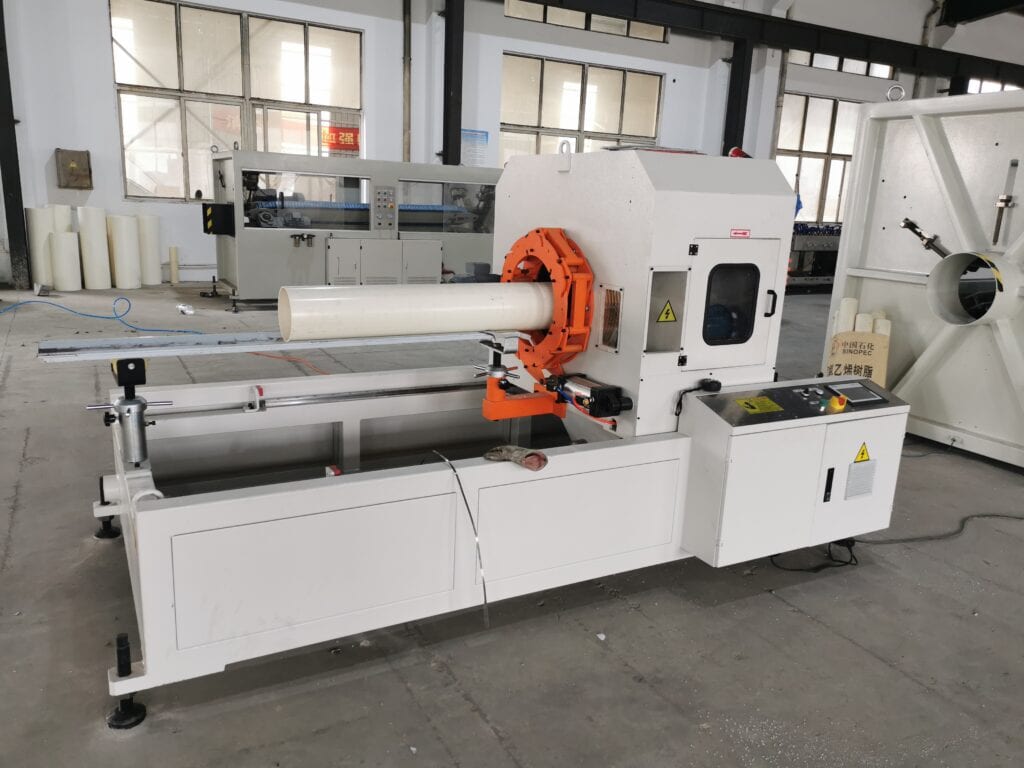
Application of PVC-O pipe
PVC-O pipes are widely used in the following fields:
Water supply pipes: used in urban water supply systems, rural tap water projects, etc.
Drainage pipes: used in urban drainage systems, rainwater drainage systems, etc.
Industrial pipes: used for transporting chemical liquids, industrial wastewater treatment, etc.
Agricultural irrigation: used in farmland irrigation systems.
Construction: used in water supply and drainage systems of buildings.
PVC-O pipe extruders are ideal for producing high-performance PVC-O pipes due to their high efficiency, energy saving and high quality.
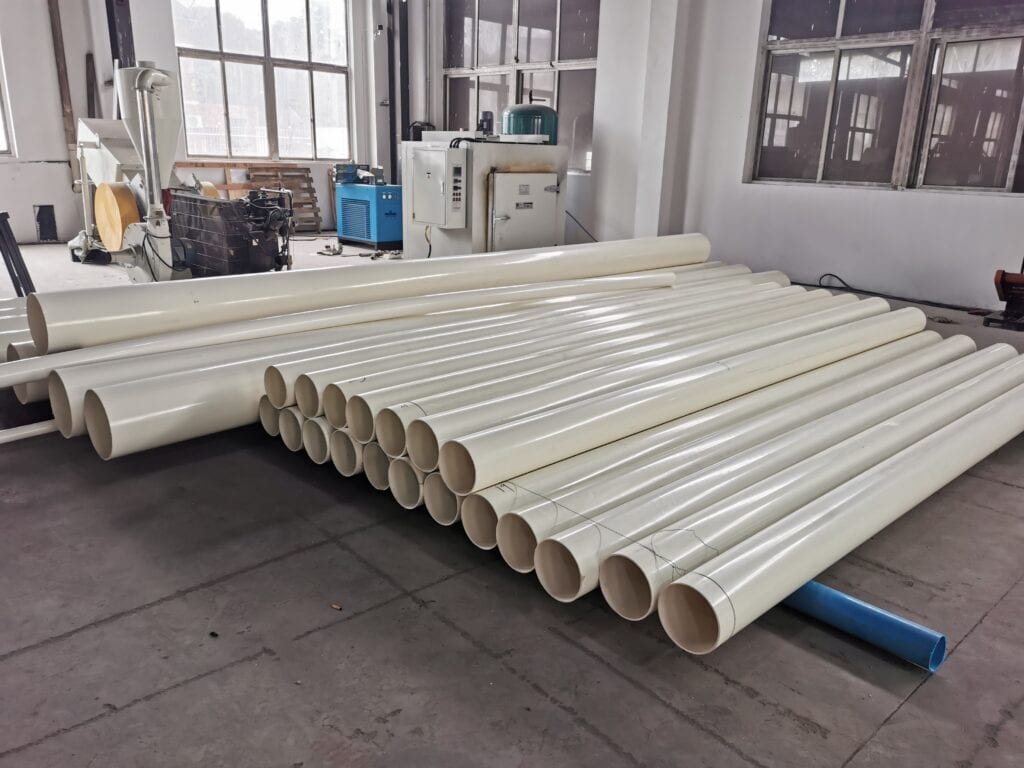
PCV-O pipe extruder VS PVC-U pipe extruder
1、Material properties and applications
PVC-U Extruder:
Material properties: PVC-U (unplasticized polyvinyl chloride) is a hard plastic with good chemical resistance and mechanical strength.
Application areas: Mainly used in the production of standard pipes, drainage pipes, cable sheaths, etc.
PVC-O Extruder:
Material properties: PVC-O (biaxially oriented polyvinyl chloride) has higher impact strength and fatigue resistance through a biaxial stretching process. At room temperature, the impact strength of PVC-O is five times that of PVC-U.
Application areas: Suitable for applications that require higher strength and durability, such as water supply pipes, industrial pipes, and agricultural irrigation systems.
2、Extrusion process
PVC-U Extruder:
Process characteristics: Single screw extruder is usually used, which has simple structure, low cost and is suitable for large-scale production.
Production efficiency: It is suitable for producing thermoplastic materials with uniform performance and has high production efficiency.
PVC-O Extruder:
Process characteristics: usually use a twin-screw extruder, which can better mix and shear materials and is suitable for producing high-strength and high-performance PVC-O pipes.
Production efficiency: Although the equipment cost is higher, it can handle more complex material formulas, with higher production efficiency and product quality.
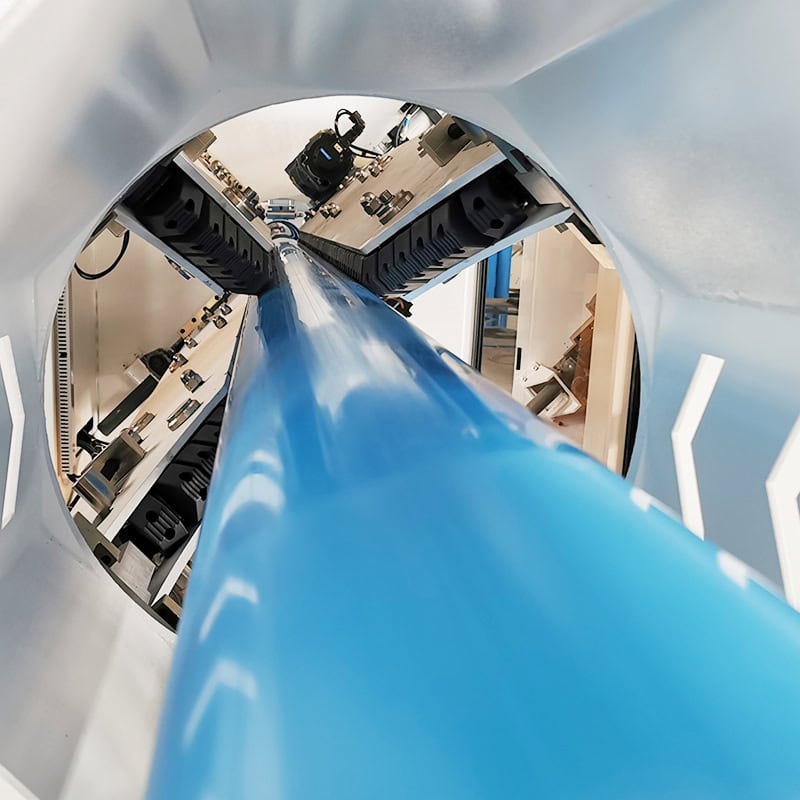
3、Equipment Features
PVC-U Extruder:
Equipment advantages: simple equipment, low maintenance cost, suitable for small and medium-scale production.
Equipment disadvantages: limited processing capacity for highly filled materials or complex formulations.
PVC-O Extruder:
Equipment advantages: It has better mixing and shearing capabilities, can handle a variety of materials, and is suitable for producing high-performance pipes.
Equipment disadvantages: The equipment is complex, the maintenance cost is high, and more professional operation and maintenance knowledge is required.
4、Production cost and economic efficiency
PVC-U Extruder:
Cost advantage: The initial investment and maintenance costs are low, suitable for enterprises with limited budgets.
PVC-O Extruder:
Cost advantage: Although the initial investment is higher, in the long run, it has better economic benefits due to its high production efficiency and high-quality output.
Summarize
Choosing a PVC-U extruder or a PVC-O extruder depends on the specific application requirements, production scale and budget. If you need to produce high-strength, high-performance pipes, a PVC-O extruder is a better choice; if you need low-cost, high-efficiency production, a PVC-U extruder may be more suitable.
Key Factors to Consider When Setting Up an Extrusion Line for Plastic Processing
Material Type: The choice of plastic material, such as PVC, HDPE, or PP, greatly influences the selection of extrusion equipment and process parameters. Different materials have varying melting points, viscosities, and flow characteristics, which must be considered to optimize the “extrusion plastic process” and achieve the desired product properties.
Extruder Type: When it comes to extruders, there are single screw extruders and twin screw extruders. Single screw extruders are favored for their low cost, simple design, durability, and reliability. They offer a favorable performance-to-cost ratio, making them a popular choice for many applications. On the other hand, twin screw extruders provide enhanced stability, superior performance in exhausting air and volatile fumes, increased production speed, and improved mixing capabilities. The choice between the two depends on specific production needs and the desired outcomes of the “extruder plastic” process.
Die Design: The die is a critical component in the extrusion line, as it determines the shape and dimensions of the final product. A well-designed die ensures uniform flow of the molten plastic, resulting in consistent product dimensions and high-quality output. It is essential to work with experienced die designers to create a die that meets the specific requirements of the product being manufactured.
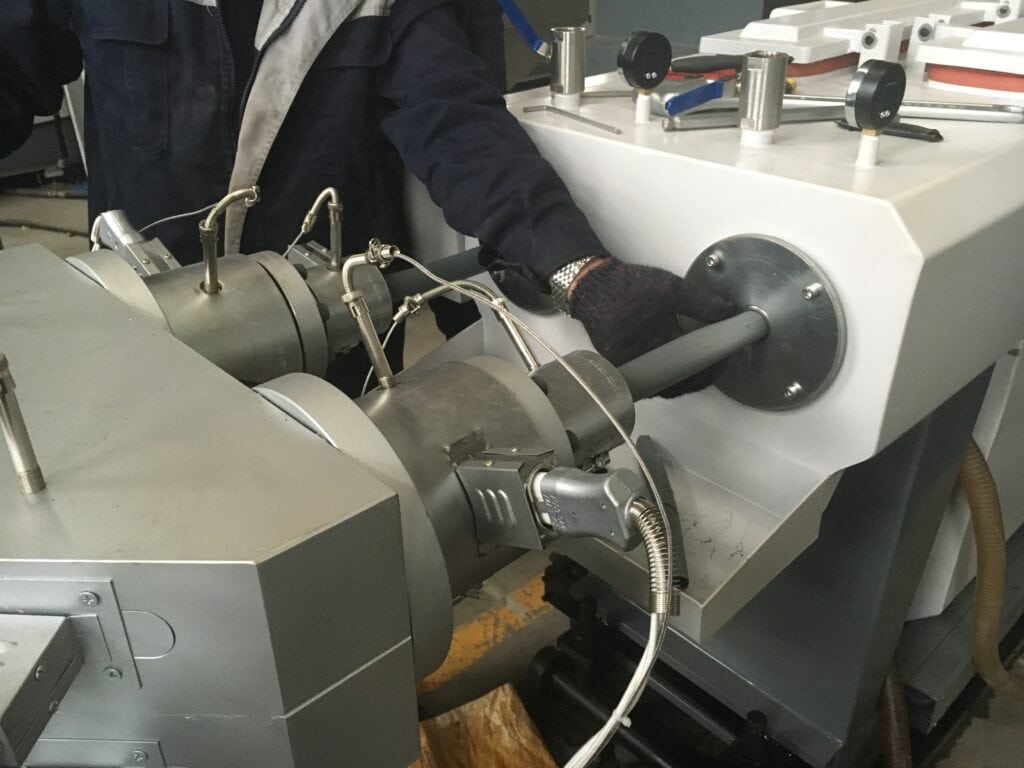
Temperature and Pressure Control: Precise temperature and pressure management are vital in the “extrusion plastic process.” The temperature affects the melting and flow of the plastic material, while pressure influences the density and quality of the extruded product. Advanced control systems are used to monitor and regulate these parameters, ensuring optimal conditions for producing high-quality products and maintaining production efficiency.
Production Speed and Efficiency: Balancing production speed with product quality is a key consideration in setting up an extrusion line. Different extrusion lines have varying capabilities in terms of throughput and speed. It is important to select an extrusion line that can meet the production demands without compromising on product quality. Modern extrusion lines often incorporate features such as high-speed screw drives and efficient cooling systems to enhance production efficiency while maintaining product integrity.
Automation and Control Systems: Modern plastic extrusion lines come equipped with advanced automation and control systems. These systems offer numerous benefits, such as improved process control, increased production efficiency, reduced operator error, and enhanced product quality. They enable real-time monitoring of various process parameters, allowing for quick adjustments and optimization of the extrusion process. Investing in an extrusion line with robust automation and control capabilities can provide a significant competitive advantage in the plastic processing industry.
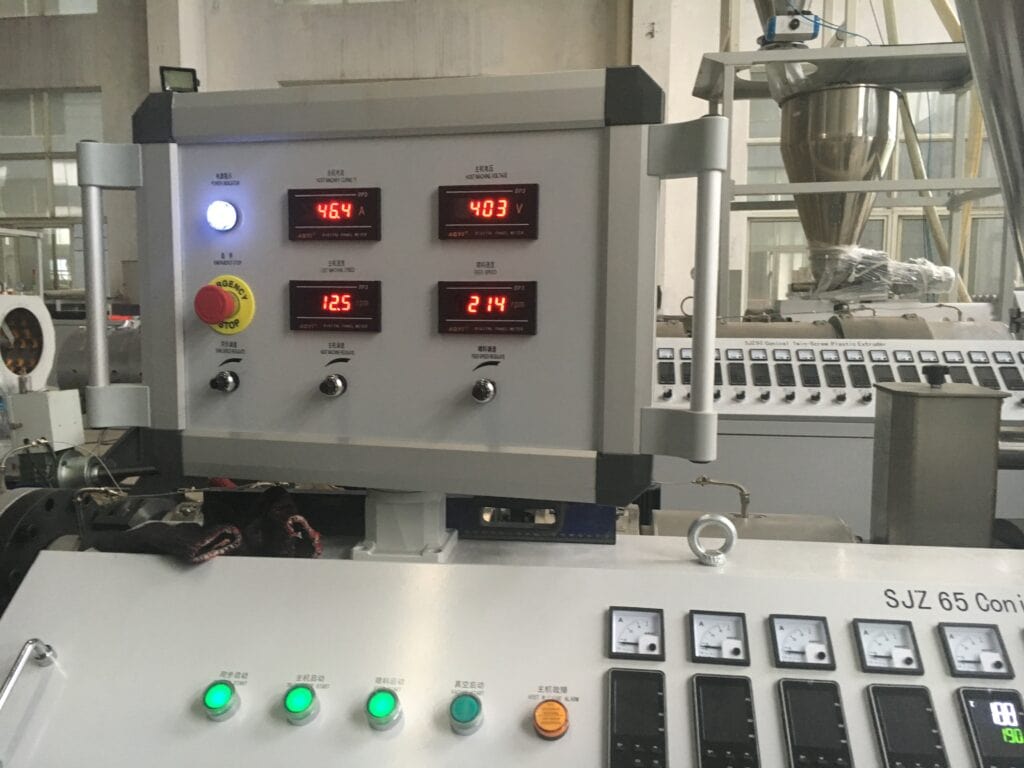
The Plastic Extrusion Process
Step one: Adding additives – This step involves adding colorants, UV inhibitors, and other chemicals to the plastic material to enhance its properties. These additives play a crucial role in improving the performance and appearance of the final product, making them an essential part of the “extrusion plastic process.”
Step two: Moltening material – The plastic material is fed into the hopper and then conveyed into the barrel of the extruder. Here, it is subjected to heat and pressure, causing it to melt and form a homogeneous molten mass. The extruder’s screw design and speed are carefully controlled to ensure proper melting and mixing of the material.
Step three: Forming the mold – Once the plastic material is molten, it is pushed through the die, which gives it the desired shape and profile. The die design is critical in this step, as it determines the final dimensions and appearance of the extruded product. The molten plastic is forced through the die under high pressure, ensuring a consistent and accurate shape.
Step four: Cooling – After the plastic product is formed, it needs to be cooled to solidify it. Cooling systems, such as water baths or air cooling units, are used to rapidly cool the extruded product. Proper cooling is essential to prevent product deformation and ensure dimensional accuracy.
Types of Plastic Extruders
Single-screw extruder: As the most prevalent continuous extruder, the single-screw extruder is favored for its low cost, simple design, durability, reliability, and favorable performance-to-cost ratio. It is suitable for a wide range of applications and is often the first choice for many manufacturers looking to invest in “plastic extrusion line” equipment.

Twin Screw Extruders: Offering enhanced stability, superior performance in exhausting air and volatile fumes, increased production speed, and improved mixing capabilities, twin screw extruders are ideal for more demanding applications. They are particularly useful when working with materials that require thorough mixing or when high production volumes are needed.

Multiscrew extruder with more than two screws: Featuring multiple interlocking screws, multiscrew extruders are used for specific applications that require advanced mixing and processing capabilities. They provide even greater control over the extrusion process, allowing for the production of complex and high-quality products.
Plastic Material of Plastic Extrusion line
Common plastic materials used in extrusion include polyethylene (PE), polypropylene, polyacetal, acrylic, nylon, polystyrene, polyvinyl chloride (PVC), and acrylonitrile butadiene styrene (ABS). Each material has its unique properties, such as flexibility, durability, and resistance to corrosion, making them suitable for different applications. Factors affecting material selection include properties, cost, and availability. The choice of material will depend on the specific requirements of the product being manufactured and the desired performance characteristics.
Benefits of Plastic Extrusion
High production rates: One of the significant advantages of plastic extrusion is its ability to produce large quantities of products in a relatively short amount of time. This makes it an ideal manufacturing process for mass production, allowing businesses to meet high demand efficiently.
Low production costs: Compared to other manufacturing processes, plastic extrusion is cost-effective. The relatively simple design of the extrusion equipment, combined with the ability to produce large volumes, results in lower production costs per unit. This cost advantage can provide a competitive edge in the market, especially for businesses looking to produce cost-sensitive products.

Flexibility in design and material selection: Plastic extrusion offers a high degree of flexibility in terms of design and material selection. Manufacturers can easily customize the shape, size, and profile of the extruded products to meet specific customer requirements. Additionally, the wide range of available plastic materials allows for the production of products with varying properties, such as flexibility, strength, and resistance to chemicals. This flexibility makes plastic extrusion a versatile manufacturing process suitable for a diverse range of applications.
Common Challenges in Plastic Extrusion
Material Contamination: Improper handling of materials can lead to product defects in the “extrusion plastic process.” Contaminants such as dirt, moisture, or foreign particles can mix with the plastic material, affecting its properties and causing defects in the final product. It is crucial to implement strict quality control measures and proper material handling procedures to prevent material contamination and ensure the production of high-quality products.
Machine Maintenance: Regular maintenance of the extrusion equipment is essential to avoid downtime and reduce wear on components. Failure to maintain the machinery can result in decreased production efficiency, increased production costs, and compromised product quality. Manufacturers should establish a comprehensive maintenance schedule and invest in the necessary resources to keep the equipment in optimal working condition.
Product Quality: Maintaining consistent product quality, especially with materials that are sensitive to temperature and pressure, can be a challenge in plastic extrusion. Factors such as variations in material properties, fluctuations in process parameters, and die wear can affect the quality of the extruded products. Implementing robust quality control systems, monitoring process parameters in real-time, and conducting regular inspections can help identify and address quality issues promptly, ensuring the production of high-quality products.
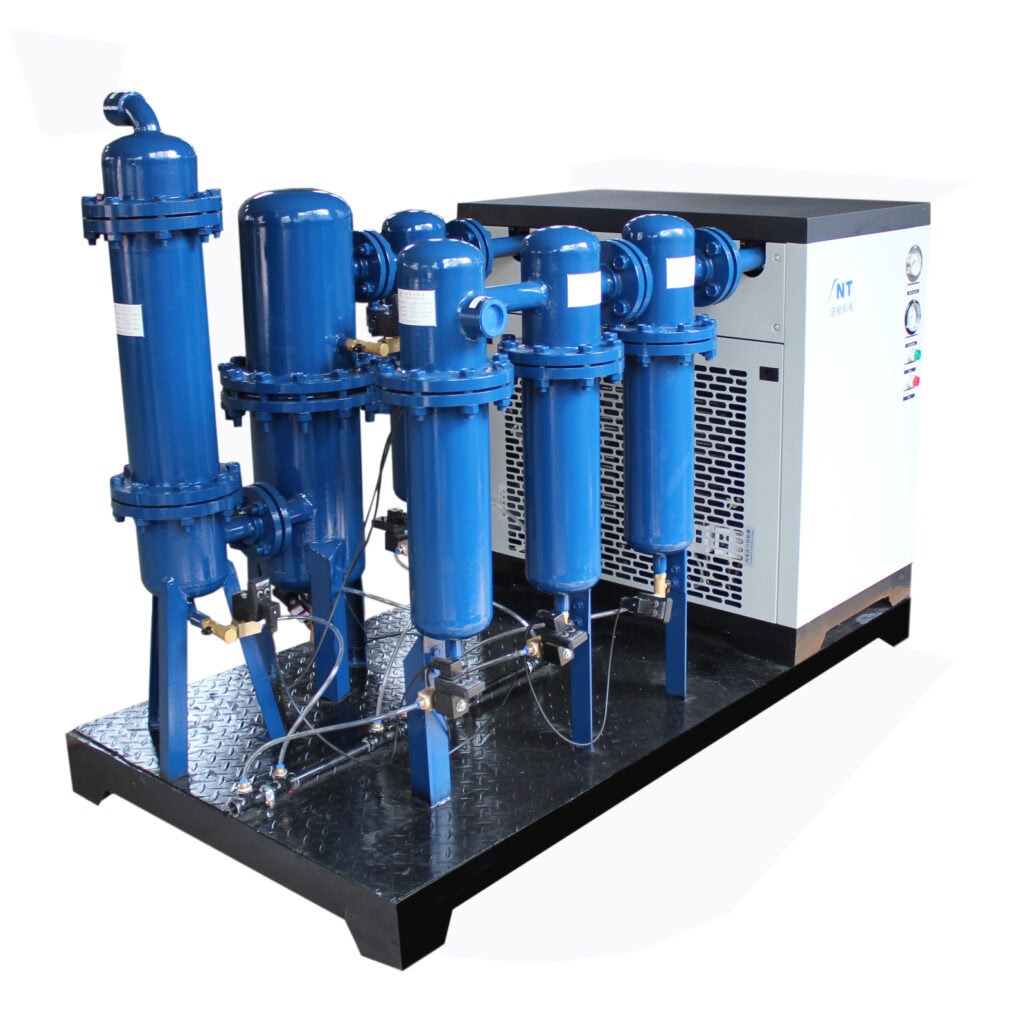
Optimizing Your Plastic Extrusion Line
Choosing the Right Extruder: To choose the best plastic extruder for your production requirements, it is important to consider factors such as production volume, material type, product complexity, and budget. Consulting with experienced suppliers and industry experts can provide valuable insights and guidance in selecting the most suitable extruder for your specific needs.
Upgrading Technology: Upgrading to more energy-efficient or faster machines can offer significant benefits in terms of production efficiency and cost savings. Modern extrusion equipment often incorporates advanced technologies such as improved screw designs, better temperature control systems, and enhanced automation features. Investing in upgraded technology can help businesses stay competitive in the market and meet increasing production demands.
Training and Expertise: Having skilled operators who understand how to fine-tune the extrusion process for optimal results is crucial. Proper training and continuous skill development of the workforce can lead to improved product quality, increased production efficiency, and reduced downtime. Manufacturers should invest in training programs and provide opportunities for their employees to stay updated with the latest advancements in plastic extrusion technology.
Quality Assurance: Implementing best practices for quality control during the extrusion process is essential to ensure the production of high-quality products. This includes regular inspections of raw materials, in-process quality checks, and final product testing. Establishing a comprehensive quality management system can help identify and address quality issues at an early stage, reducing the risk of defects and rework.
Applications of Plastic Extrusion
Wire insulation: Plastic extrusion is widely used to create insulation for wires and cables. The process allows for the production of thin, uniform layers of insulation that provide excellent electrical insulation properties, protecting the conductive wires from damage and ensuring the safe and efficient transmission of electricity.
Pipes and tubes: The manufacturing of pipes and tubes for various industries, such as plumbing, construction, and automotive, relies heavily on plastic extrusion. The process enables the production of pipes and tubes with precise dimensions, consistent wall thickness, and excellent mechanical properties. These products are lightweight, durable, and resistant to corrosion, making them ideal for a wide range of applications.
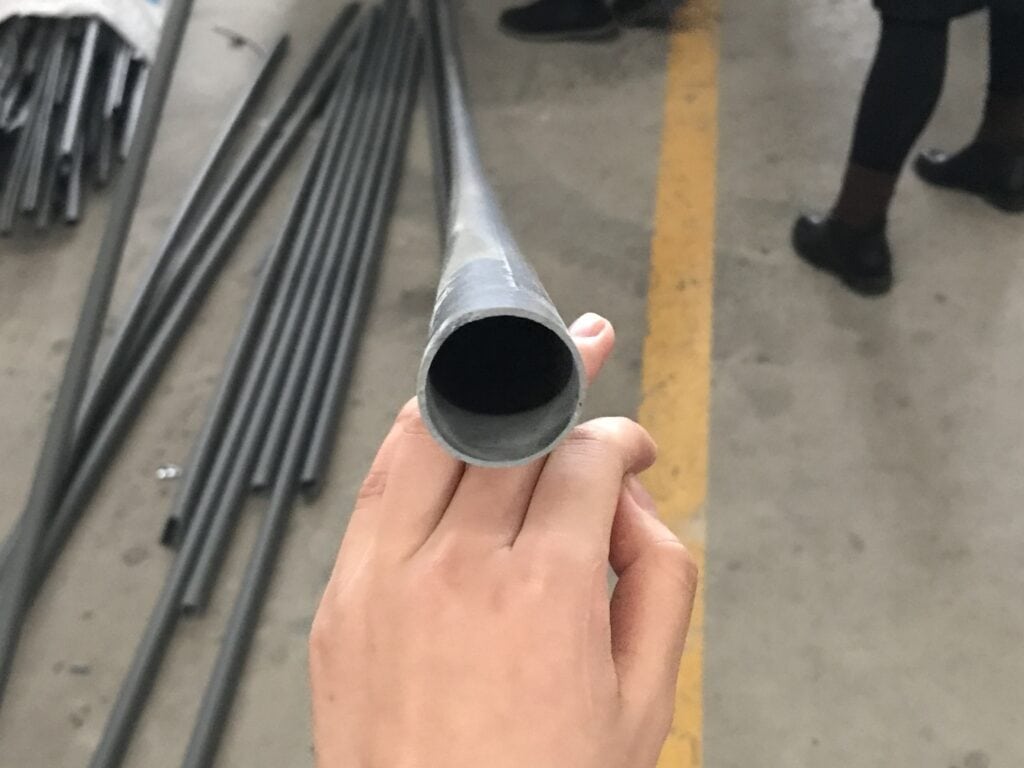
Windows and doors: Plastic extrusion is used to create window and door frames, offering several advantages over traditional materials. The extruded plastic profiles are lightweight, easy to install, and provide good insulation properties. They are also resistant to weathering, fading, and warping, ensuring long-lasting performance and low maintenance requirements.
Blinds and shades: The production of blinds and shades also benefits from plastic extrusion. The process allows for the creation of thin, flexible plastic slats that can be easily adjusted to control the amount of light entering a room. These products are durable, easy to clean, and available in a variety of colors and finishes, making them a popular choice for both residential and commercial applications.
Potential applications and innovations: As technology continues to advance, the potential applications of plastic extrusion are expanding into new industries and areas. For example, the development of lightweight and high-strength plastic materials is opening up opportunities in the aerospace and automotive industries, where weight reduction is a critical factor. Additionally, the use of 3D printing technology in conjunction with plastic extrusion is enabling the production of complex and customized products with greater precision and efficiency. These innovations and emerging applications are expected to drive the growth of the plastic extrusion market in the coming years.
Challenges and opportunities in the industry: While the plastic extrusion industry offers numerous opportunities for growth and innovation, it also faces several challenges. One of the main challenges is addressing sustainability concerns, such as reducing plastic waste and developing more eco-friendly materials and processes. Additionally, the industry needs to adapt to changing market demands, such as the increasing demand for high-performance and customized products. However, these challenges also present opportunities for businesses to differentiate themselves by investing in research and development, adopting sustainable practices, and focusing on innovation to meet the evolving needs of the market.

In conclusion, choosing the right extrusion line for plastic processing is crucial for achieving optimal efficiency and product quality. By considering factors such as material type, extruder selection, die design, temperature and pressure control,
and automation and control systems, manufacturers can set up an extrusion line that meets their specific production requirements. As the plastic extrusion industry continues to evolve, it is essential for businesses to stay updated with the latest trends and technologies, invest in regular maintenance and training, and focus on innovation to remain competitive in the market. We encourage readers to explore options for upgrading their extrusion equipment or consult with experts to find the best solution for their production needs, ensuring the continued success and growth of their plastic processing operations.
]]>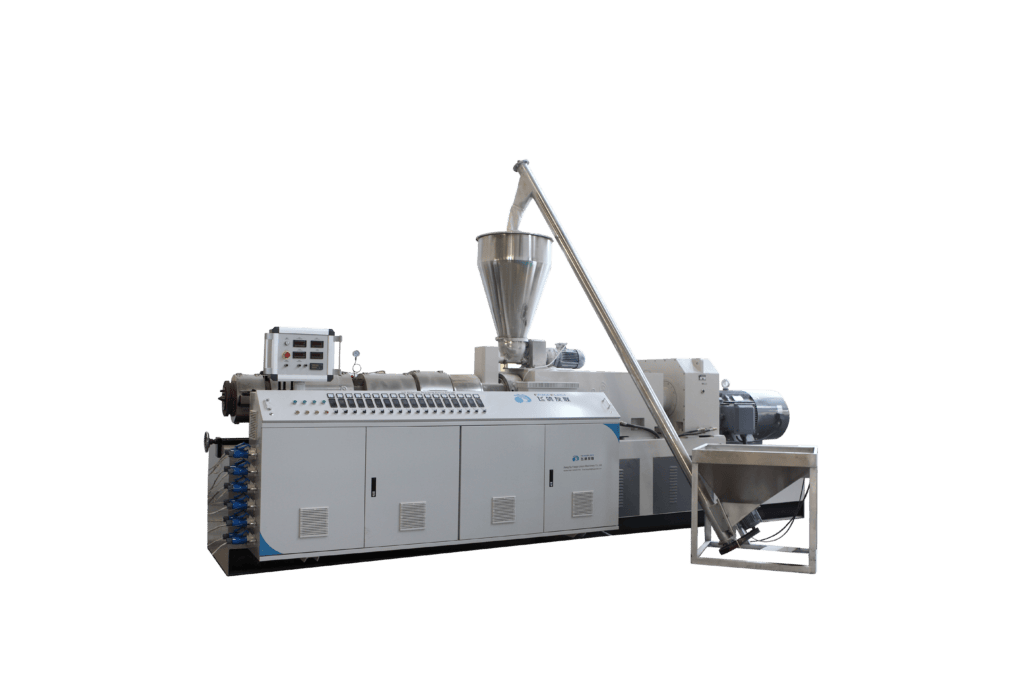
What is a PVC Twin Screw Extruder?
A PVC twin screw extruder is a specialized machine designed for the production of PVC pipes, profiles, and other plastic products. It consists of two intermeshing screws rotating within a barrel, which work together to melt, mix, and shape PVC materials. The primary purpose of the extruder is to heat and transport the PVC compound through several processing zones, ultimately shaping it into the desired product using a die.
Twin screw extruders are preferred in PVC pipe production due to their unique design, which allows for superior mixing, plasticizing, and homogenization of the PVC material. This results in pipes of consistent quality, meeting strict industry standards for performance and durability.
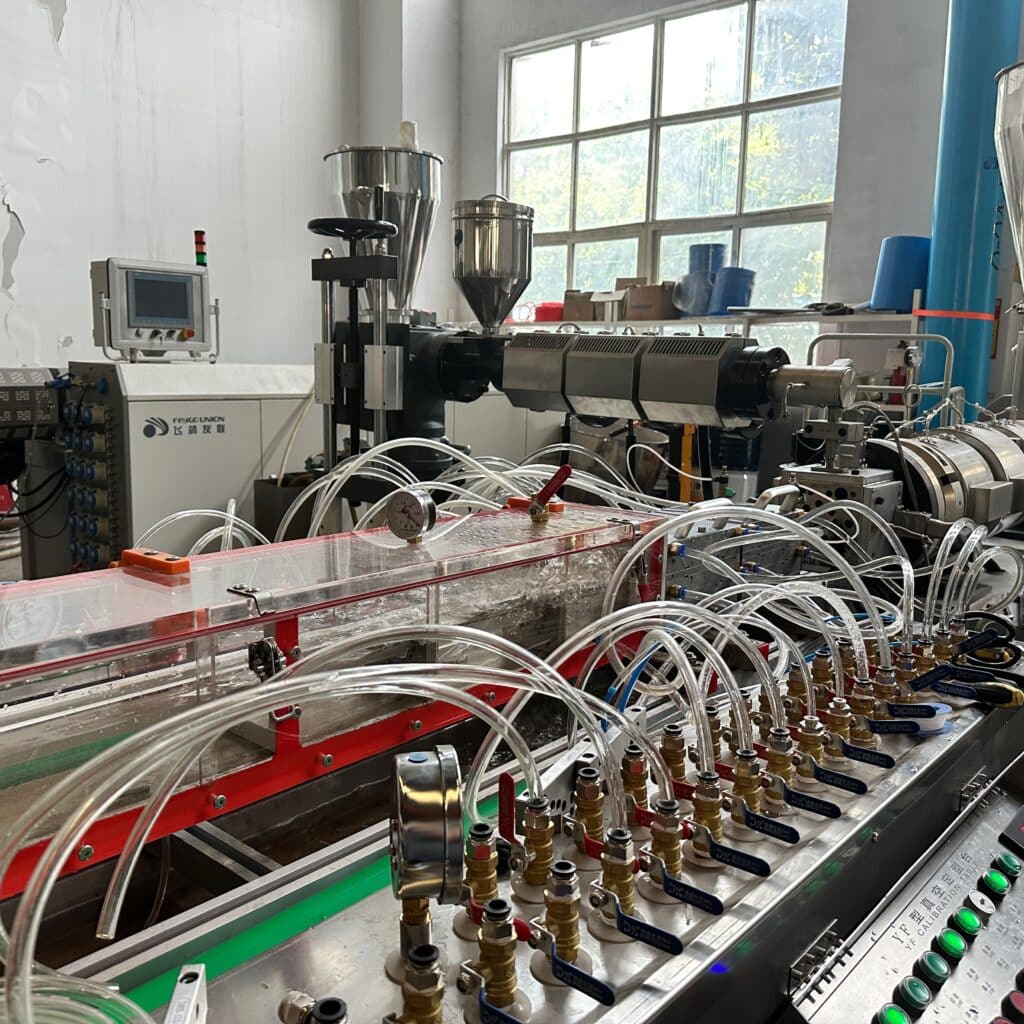
The Twin Screw Extrusion Process: How Does It Work?
The twin screw extrusion process involves several critical steps that transform raw PVC material into finished pipes. These steps include:
- Material Feeding: Raw PVC materials are introduced into the extruder via a hopper.
- Melting and Plasticization: As the PVC material moves through the barrel, it is heated and plasticized by the rotating screws.
- Mixing and Homogenizing: The twin screws blend the PVC with additives such as stabilizers, fillers, and colorants to ensure a uniform composition.
- Shaping: The molten PVC is forced through a die to create the desired shape, such as cylindrical pipes.
- Cooling and Cutting: Once the pipe exits the die, it is cooled to solidify the structure and then cut into the required lengths.
The co-rotating nature of the screws in a twin screw extruder ensures superior mixing and process efficiency, which are critical for maintaining the strength and integrity of PVC pipes.
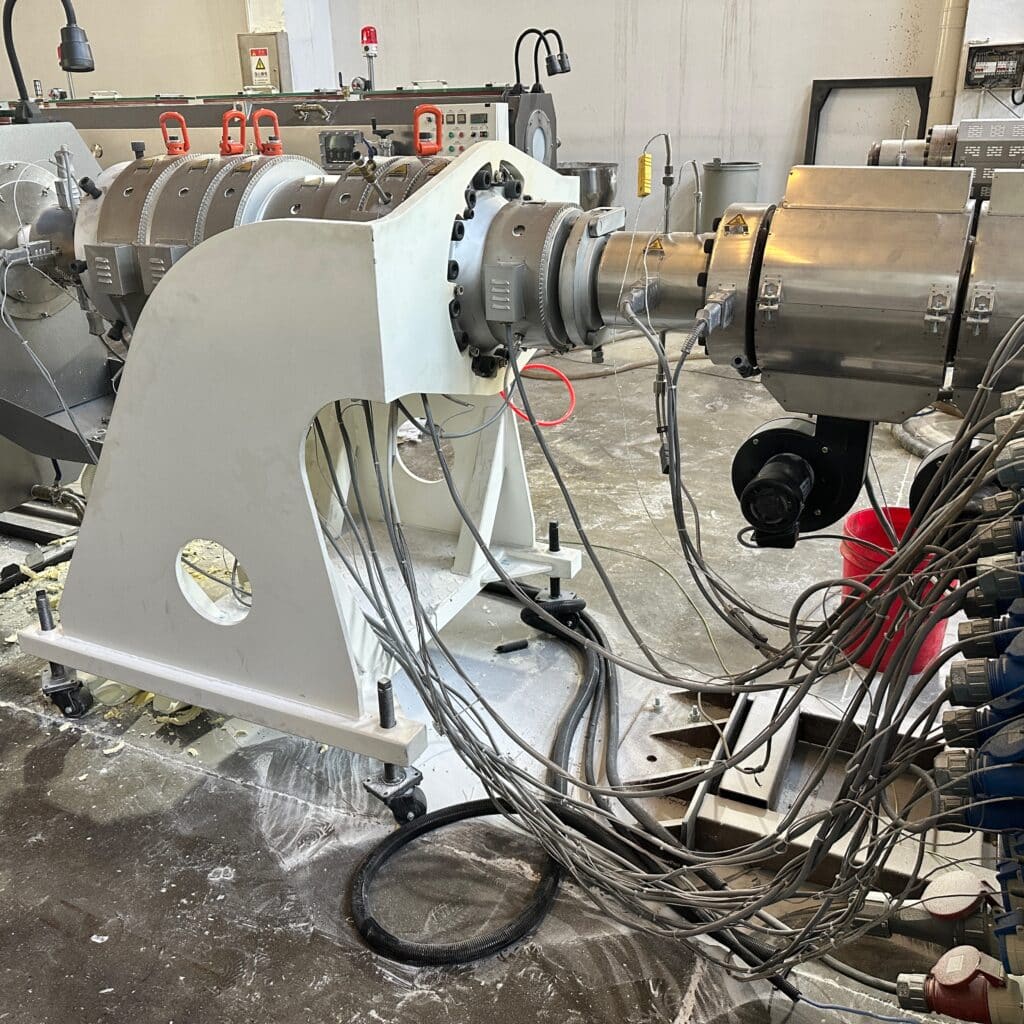
Key Benefits of PVC Twin Screw Extruders
PVC twin screw extruders offer several advantages that make them indispensable in the pipe manufacturing process:
- Enhanced Mixing and Plasticizing: The twin screw design ensures excellent dispersion of additives, resulting in a uniform product.
- Improved Efficiency: These machines process materials faster, leading to higher production rates and reduced cycle times.
- Flexibility: Twin screw extruders can handle a variety of PVC formulations, ranging from rigid pipes to flexible profiles.
- Energy Efficiency: The optimized design of twin screw extruders reduces energy consumption compared to single screw extruders.
- Consistent Quality: Precise control over temperature and process parameters guarantees consistent quality across all batches of PVC pipes.

The Importance of Choosing the Right Screws for PVC Pipe Extrusion
In PVC pipe extrusion, the design of the screws is critical to achieving optimal results. Twin screw extruders typically feature two types of screw configurations:
- Co-Rotating Screws: In this configuration, both screws rotate in the same direction. This design provides excellent mixing and kneading capabilities, making it ideal for general-purpose applications.
- Counter-Rotating Screws: Here, the screws rotate in opposite directions. This configuration delivers even better mixing and is suitable for processing specific PVC formulations.
The choice of screw configuration depends on the type of PVC material being processed and the desired product specifications. For most PVC pipe production applications, co-rotating screws are preferred due to their versatility and efficiency.
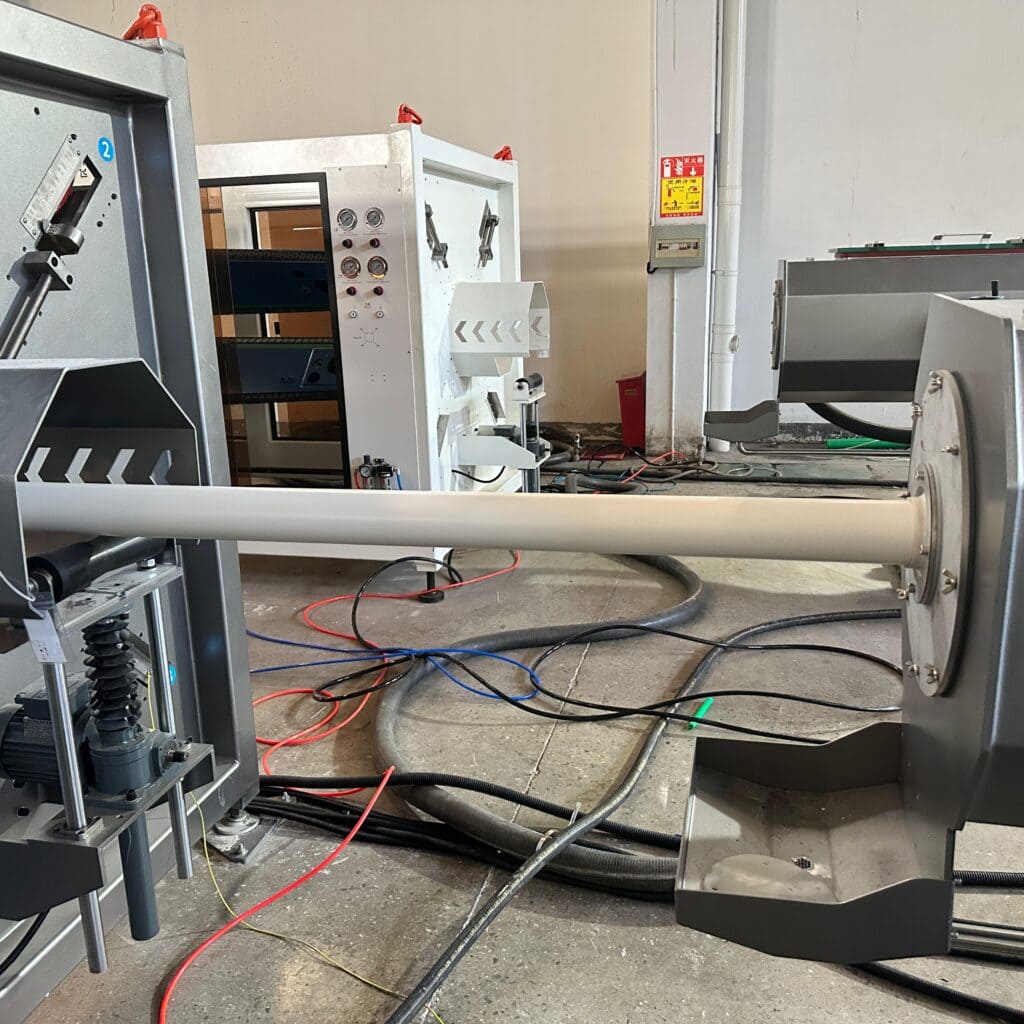
Why Choose a PVC Twin Screw Extruder Over a Single Screw Extruder?
While single screw extruders are commonly used in the plastic processing industry, twin screw extruders provide several distinct advantages:
- Better Mixing: Twin screw extruders excel in blending PVC materials with additives, resulting in a more uniform output.
- Higher Throughput: These machines process materials more quickly, improving production efficiency.
- Greater Control: Twin screw extruders allow precise adjustments in process parameters, ensuring consistent product quality.
These benefits make PVC twin screw extruders the ideal choice for manufacturers who aim to maximize production capabilities while maintaining high standards of quality.
Applications of PVC Twin Screw Extruders in Pipe Manufacturing
PVC twin screw extruders are widely used in various pipe manufacturing sectors due to their versatility and efficiency. Common applications include:
- Water and Drainage Pipes: These pipes are essential for municipal water distribution systems, sewage networks, and agricultural irrigation.
- Electrical Conduit Pipes: PVC pipes are frequently used in construction to house and protect electrical wiring due to their durability and ease of installation.
- Industrial and Commercial Pipes: From HVAC systems to industrial plumbing, PVC pipes are utilized in a range of industries for their cost-effectiveness and reliability.
The ability of twin screw extruders to produce PVC pipes with excellent mechanical properties, such as impact resistance and flexibility, makes them an invaluable asset in the manufacturing process.

Why Choose a PVC Twin Screw Extruder for Your PVC Pipe Production
In summary, PVC twin screw extruders are essential tools for manufacturers seeking high-quality, consistent PVC pipes. Their advanced design ensures superior mixing, faster processing, and exceptional product quality, making them the preferred choice for the PVC pipe extrusion process.
If you want to improve the efficiency and output of your PVC pipe production line, investing in a PVC twin screw extruder is a smart decision. Contact us today to learn more about our PVC twin screw extruders or to schedule a consultation for your next project. Let us help you optimize your production process with the best extrusion technology available.
]]>PVC pipes are the cornerstone of construction, agriculture and plumbing, where high-quality pipes are essential. Plastic co-extrusion is an innovative way to manufacture PVC pipes, which offers many advantages over traditional single-layer extrusion. This article takes an in-depth look at the advantages and significance of PVC pipe co-extrusion lines, explains the characteristics of the technology, and what to consider for investment.

Why should we pay attention to the plastic co-extrusion market?
Pipe extrusion is a high-volume production process where plastic feedstock is melted and formed into a continuous profile. This versatile process can produce a variety of products, including pipe/tubing, weatherstripping, fencing, deck railings, and window frames.
The process begins by feeding plastic pellets into the barrel of an extruder, which then melts and shapes the material into the desired shape.
Understanding the basics of extrusion is essential for PVC pipe manufacturers looking to increase production capabilities.
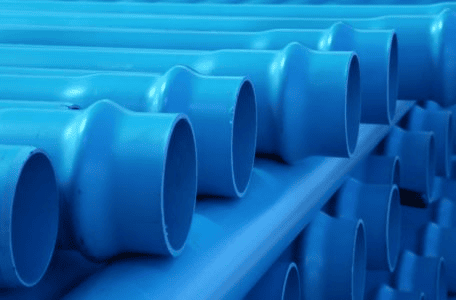
PVC-O pipe is a new evolution of PVC-U pipe and PVC-M pipe in PVC pipe. PVC-O pipe is a pipe made by a special orientation processing technology. The PVC-U blank pipe produced by extrusion method is stretched axially and radially, so that the PVC long chain molecules in the pipe are arranged regularly in biaxial direction, and a new type of PVC pipe with high strength, high toughness, high impact resistance and fatigue resistance is obtained.
What is the current situation of the PVC pipe market?
PVC pipe extruder production lines are suitable for a variety of materials. PVC/OPVC/CPVC pipe extruder production lines consist of a series of main machines and optional auxiliary machines. They can produce pipes of different diameters and can also be customized according to customer specific needs.
These production lines can manufacture conduits, pressure pipes, water pipes, drain pipes, etc. The flexibility and customization options of PVC pipe extrusion production lines are essential to meet the diverse needs of the market.
At present, the application prospects of PVC-O pipes are also very broad. This pipe has greater toughness and strength, so it can have a longer life, which is a new market worth exploring
Why are plastic pipes so widely used?
Plastic pipes, especially PVC and the more recent PVC-O, have several advantages over traditional materials. They are lightweight, strong and corrosion-resistant. Plastic pipes are long, will not rust, have good elasticity and toughness, and can be used in a wider range of industries, such as building materials, water supply and drainage, decoration, household water supply and drainage, irrigation, etc. According to Grand View Research, the global demand for plastic pipes is growing due to the optimization of cost and quality, and is expected to grow at a compound annual growth rate of 6.1% from 2020 to 2027.

PVC Pipe Applications and Types: PVC pipes find extensive use across industries, including agricultural water supply systems, architectural water supply systems, and more. They serve purposes such as water supply, drainage, and other fluid transport applications. PVC pipes come in different types, including single-cavity, double-cavity, and four-cavity machines, each with unique features and benefits that cater to specific production needs.
How to choose a manufacturer to produce PVC pipes?
Setting up a successful PVC pipe manufacturing plant requires comprehensive consideration of various factors, including market demand and customer requirements. Key factors to consider include production capacity, equipment and machinery.

The optimized pipe production process is as follows
The PVC/OPVC/CPVC pipe manufacturing process involves multiple stages:
①, Mixing raw materials
②, Loading the mixed material into the feeder
③, Melting the material
④, Forming it into a pipe
⑤, Cooling
⑥, Blow molding
⑦, Cutting the pipe into customized lengths with a tractor and a cutter.
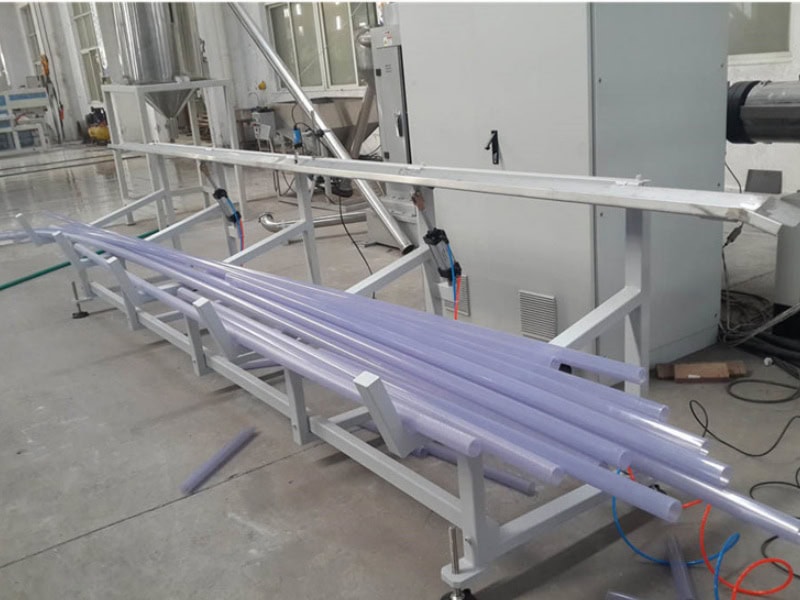
In addition to producing according to a complete standardized production process, quality control is non-negotiable in PVC/OPVC/CPVC pipe manufacturing to ensure that the product meets high standards. Certifications from well-known organizations such as SGS add a layer of trust and assurance. For example, FAYGO’s extrusion downstream equipment has been certified by SGS, demonstrating the company’s commitment to quality.

Common difficulties and solutions: Raw material quality, equipment maintenance, and quality control are common challenges in PVC/OPVC/CPVC pipe manufacturing. Using high-quality raw materials, regularly maintaining equipment, and implementing quality control measures can solve some of the problems, while continuous monitoring and improvement of production processes can help ensure high-quality products and maintain a competitive advantage.
The future prospects of PVC pipe manufacturing are good, with demand growing due to cost and quality optimization. Advances in technology and equipment can improve efficiency and reduce costs. The adoption of sustainable materials and practices can also reduce the environmental impact of PVC pipe manufacturing, in line with global sustainable development goals.
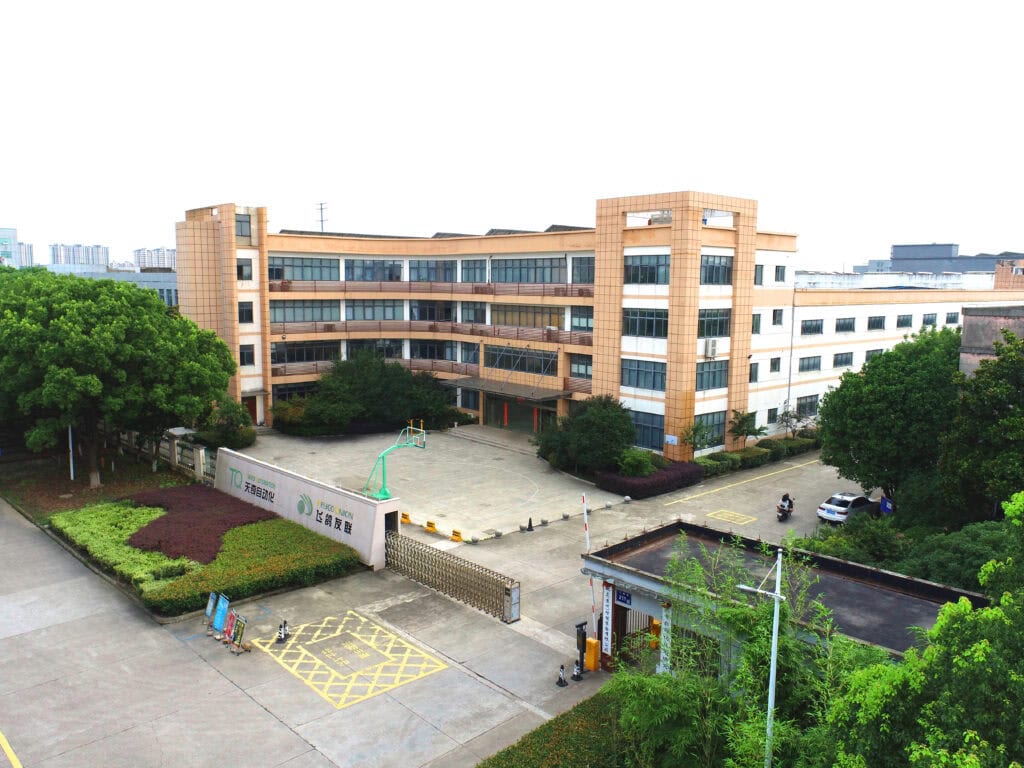
In summary, this article comprehensively introduces PVC pipe extruders and the considerations for starting a pipe plant. If you have further questions or need more information, please feel free to contact us. You are welcome to visit our factory and learn more about our products and services. We are committed to providing high-quality PVC pipe extruders and excellent customer service.
]]>